Why is static electricity shocking me on my treadmill? The answer usually begins with friction, not a serious electrical failure. As your shoes rub against the moving belt, electrons can transfer between surfaces. Synthetic clothing, rubber soles, and dry indoor air can intensify that charge. You may feel a sharp snap when your hand touches the console, side rail, or metal frame. It can happen more often during winter, when indoor humidity drops.
Dr. William D. Greason, author of Electrostatic Hazards in the Process Industries, wrote, “Static electricity is a surface phenomenon caused by contact and separation.” His explanation helps clarify why a treadmill can feel electrically active without delivering continuous current. However, I would not dismiss repeated shocks as harmless. A worn belt, loose grounding connection, damaged power cord, or faulty outlet may also need attention. Unplug the treadmill before inspecting it. Check for frayed cables, unusual smells, heat, or unstable operation. Stop using it if any warning sign appears.
A practical test is simple. Wear cotton clothing, avoid rubber-soled shoes, and increase room humidity moderately. Touch a grounded metal object before touching the treadmill. The shock may disappear. That result points toward static buildup, but it does not prove the machine is safe. Treadmill models differ, and online advice cannot replace a qualified technician’s inspection. This article examines the likely causes, safer prevention steps, and the warning signs that deserve professional attention.
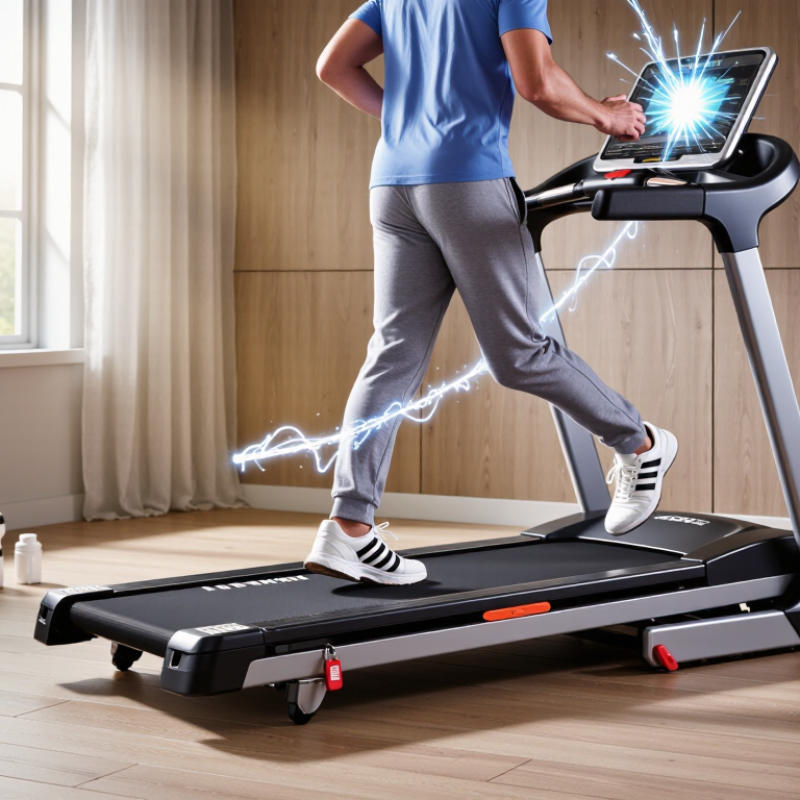
A treadmill can shock you when static electricity builds on your body and releases through its metal frame. The shock is usually brief, sharp, and surprising rather than dangerous. It feels sudden.
Static electricity forms through friction. Your shoes rub against the moving belt, while clothing may rub against the handrails or exercise surface. Synthetic fabrics can increase this charge. Dry indoor air makes the problem worse because moisture normally helps electricity leave your body gradually. Rubber soles and insulated treadmill parts may also prevent the charge from dispersing.
I once blamed the motor for every small shock. That assumption was not fully accurate. The motor can be involved if wiring or grounding has a fault, but ordinary static often comes from friction and dry conditions. Try increasing room humidity, wearing natural-fiber clothing, and touching a grounded metal object before gripping the rails. Keep the treadmill clean and follow its maintenance instructions, since dust can complicate electrical problems.
If shocks continue, become painful, or happen even when the belt is stopped, unplug the treadmill. Do not remove electrical covers unless you are qualified. A licensed technician should check the outlet, grounding, power cord, and internal wiring. A simple static discharge is common, but repeated shocks deserve attention.
Static electricity is created when two materials repeatedly contact and separate, transferring electrons between their surfaces. The approximate voltage levels below show why synthetic clothing, rubber-like surfaces, and dry air can make a small treadmill discharge feel noticeable. Treadmill voltage varies with belt material, footwear, clothing, flooring, and humidity; these values are general electrostatic examples rather than measurements from a specific treadmill.
Why Is My Treadmill Shocking Me With Static Electricity?
Common Causes of Static Shocks During Treadmill Use
A small snap from the handrail often comes from friction, not a serious electrical failure. The moving belt rubs against rollers and the deck, creating static charge during exercise. Dry indoor air makes this charge build faster, especially during winter. Synthetic shirts, socks, and shoes can increase the effect. I have noticed stronger shocks after long sessions in rooms with heated air.
Humidity matters.
The floor can also influence static buildup. Rubber mats and some synthetic carpets may hold charge instead of releasing it safely. Your footwear may add another insulating layer. A grounded outlet usually helps, but a loose or damaged outlet can create a different safety concern. Never use an extension setup that feels warm, loose, or unreliable.
Cleaning and maintenance may reduce friction. Follow the equipment manual when checking belt alignment, lubrication, and deck condition. Too much lubricant can attract dust, while too little may increase friction. I would not guess here; incorrect lubrication can create new problems. Wipe the frame with a slightly damp cloth, then let it dry fully. Increasing room humidity and wearing more natural-fiber clothing may also help.
If the shock feels strong, repeats when the machine is idle, or comes with a burning smell, stop using it. Unplug the treadmill and ask a qualified technician to inspect the grounding and internal wiring. A simple static snap is usually minor, but assuming every shock is harmless would be careless.
| Common Cause | How It Creates Static | Typical Conditions | Likelihood | Practical Prevention | When to Inspect or Stop Use |
|---|---|---|---|---|---|
| Dry indoor air | Low humidity allows electrical charge to remain on clothing, skin, and nearby surfaces instead of gradually dissipating into the air. | Indoor relative humidity below approximately 30%–40%, especially during cold-weather heating. | High | Use a hygrometer, maintain indoor humidity near 30%–50%, and use a properly maintained humidifier when appropriate. | If shocks continue in moderate humidity, check the treadmill and surrounding electrical equipment. |
| Friction between the belt, deck, shoes, and clothing | Repeated contact and separation can transfer electrons between different materials, causing a charge to build up on the user or treadmill frame. | Long workouts, fast belt movement, synthetic fabrics, and dry conditions. | High | Wear breathable natural or blended fabrics, keep the walking belt clean, and follow the equipment manual for belt lubrication and adjustment. | Stop and inspect the unit if the belt slips, drags, makes unusual noises, or becomes visibly damaged. |
| Synthetic clothing | Polyester, nylon, acrylic, and similar fibers can accumulate charge through friction more readily than many natural-fiber garments. | Loose or layered synthetic workout clothing rubbing during exercise. | Moderate | Try cotton or lower-static athletic blends and avoid excessive layering in very dry rooms. | Clothing is unlikely to be the only concern if shocks occur when the treadmill is switched off or disconnected. |
| Rubber or plastic footwear and floor surfaces | Insulating soles and floor materials can prevent charge from dissipating, allowing static to remain on the body until contact with metal. | Rubber-soled shoes, vinyl flooring, carpets, or exercise mats. | Moderate | Keep the area clean and dry, reduce unnecessary carpet friction, and avoid placing the treadmill on unsuitable surfaces. | Do not remove safety grounding or use improvised conductive straps that are not approved for the equipment. |
| Touching the metal frame after walking or running | The metal frame provides a conductive path, so the accumulated charge may discharge suddenly as a brief spark or sharp sensation. | Shock occurs only at the moment of touching a handrail, frame, or console support. | High | Before touching metal, briefly touch a nearby grounded metal object with a finger or use an approved static-control method. | A single brief snap is usually static; repeated shocks, tingling, or shocks without direct metal contact require inspection. |
| Poor grounding or an unsuitable outlet | A grounding problem may allow leakage current or make an electrical fault more hazardous. This is different from an ordinary one-time static discharge. | Persistent tingling, shocks while the motor is operating, damaged plugs, loose outlets, or use of adapters that defeat grounding. | High | Plug the treadmill directly into a correctly grounded outlet and follow local electrical requirements. Do not bypass the ground connection. | Unplug the treadmill and stop using it if shocks are repeated, sustained, unusually strong, or occur without friction or contact with metal. Have a qualified technician inspect it. |
| Damaged power cord or internal wiring | Exposed, pinched, frayed, or damaged wiring can create an electrical safety hazard rather than a harmless static discharge. | Visible cord damage, burning odor, sparks, circuit trips, flickering, or shocks from multiple metal parts. | High | Keep the cord away from heat, moving parts, and walkways. Replace damaged components only with compatible parts. | Disconnect power immediately and arrange professional repair. Do not operate the treadmill until the fault is resolved. |
| Dust, debris, or inadequate belt maintenance | Accumulated debris and excessive belt friction can increase mechanical rubbing and contribute to charge generation, heat, and premature wear. | Visible dust under the treadmill, a dry belt, belt hesitation, or increased motor noise. | Moderate | Clean according to the maintenance instructions and use only the specified lubricant and amount. | Stop using the treadmill if the belt overheats, stalls, smells burnt, or shows severe wear. |
| Nearby electronic equipment or power strips | Shared or overloaded electrical connections can complicate troubleshooting and may increase electrical risk, although they are not a typical cause of ordinary static buildup. | Treadmill shares a circuit with heaters, high-power appliances, or multiple extension devices. | Low to Moderate | Use the recommended outlet arrangement and avoid unsuitable extension cords, multi-plug adapters, and overloaded power strips. | Stop use if the outlet becomes warm, the breaker trips repeatedly, or other devices produce abnormal electrical symptoms. |
| Safety distinction: A brief, isolated snap after walking is commonly caused by static electricity. Repeated shocks, persistent tingling, shocks from the controls or frame while the treadmill is running, burning smells, sparks, damaged wiring, or circuit-breaker trips may indicate an electrical fault. Unplug the treadmill and seek qualified electrical service rather than attempting to bypass grounding or repair live components. | |||||
I used to blame the treadmill motor for every small shock. Often, the real cause is friction. A moving belt rubs against shoes and clothing, building an electrical charge on the body. Dry indoor air makes this charge harder to release. The shock may appear when your hand touches a metal rail or control panel.
Shoes matter more than many users expect. Rubber and synthetic soles can act like electrical insulators. They hold the charge instead of letting it escape through the floor. A belt made with synthetic materials may increase friction, especially when it is dry or poorly aligned. I have also noticed stronger shocks on cold days, when indoor humidity falls. That detail is easy to overlook.
Flooring changes the situation again. Carpet can trap charge, while some hard floors allow slower discharge. However, flooring is not a complete solution. Keep the area clean and dry, and follow the equipment manual for belt care and grounding checks. A technician can inspect the power cord, outlet, grounding path, and internal wiring. Do not open the motor cover while connected to power. If the shock feels strong, happens repeatedly, or occurs without touching moving parts, stop using the treadmill. It may not be static electricity at all. I cannot treat every shock as harmless, and that uncertainty deserves attention.
A brief snap after walking often comes from static electricity, not the treadmill’s motor. Synthetic clothing, dry flooring, and rubber surfaces can separate electrical charges during exercise. The ESD Association reports that people may feel static discharge at roughly 3,000 volts. The voltage sounds alarming, but the energy is usually very small. Still, the sensation deserves attention.
Measure room humidity with a small hygrometer. ASHRAE’s Handbook commonly identifies 30% to 60% relative humidity as a practical indoor comfort range. IEC 61340-5-1:2024 uses 30% to 70% for many controlled electrostatic environments, although that standard is not a home treadmill rule. A humidifier may help during dry seasons. Keep it away from electrical equipment. Cotton clothing can also reduce charge buildup compared with fleece or highly synthetic fabrics.
Before touching the frame, place one hand on a grounded metal object. Wear shoes with less insulating soles, and avoid dragging your feet. Clean the belt and surrounding floor according to the maintenance instructions. Do not spray liquid near the motor or control console. I would not assume every shock is harmless. Unplug the treadmill if shocks continue, feel like sustained tingling, or occur with burning smells, sparks, or breaker trips. A qualified technician should check grounding and insulation. My own first check would be humidity, clothing, and flooring, but that can miss an electrical fault.
A small snap after walking can be ordinary static electricity, especially in dry rooms. The ESD Association’s reference tables report that a person walking across carpet may generate about 12,000 volts at 20% relative humidity, compared with roughly 1,500 volts at 65%. The current is usually brief. It may feel sharp but harmless.
A repeated shock from the metal frame deserves more caution. A damaged grounding pin, loose outlet connection, worn power cord, or internal insulation fault can create a genuine safety problem.
Stop there. Unplug the treadmill before touching its underside.
Do not remove the ground pin or use an adapter that defeats grounding. The National Electrical Code, NFPA 70, requires effective equipment grounding paths for powered equipment.
Notice the pattern.
Does the shock happen only after walking on carpet? Dry air and synthetic clothing may explain it. Does it happen when you touch the frame before exercising? That is more concerning. Burning smells, tingling, breaker trips, visible cord damage, or stronger shocks require professional inspection. The U.S. Consumer Product Safety Commission tracks treadmill injuries through its National Electronic Injury Surveillance System, but injury databases cannot confirm electrical safety in your machine. That part needs testing. I would not rely on a rubber mat alone; it may reduce static while hiding a grounding defect. A qualified electrician or authorized service professional should test the outlet, grounding continuity, and treadmill leakage current.
Belt friction can build static electricity during exercise. Dry air makes the charge accumulate faster. The snap often happens when touching a metal rail.
Yes. Fleece, synthetic shirts, socks, and rubber soles may hold electrical charge. Cotton clothing may reduce buildup. Shoe materials matter.
Dry rooms release charge slowly. A small hygrometer can measure humidity. A humidifier may help, but keep it away from electrical equipment.
Carpet and rubber mats may trap charge beneath the treadmill. Some hard floors release charge more slowly. Keep the floor clean and completely dry.
A dry, misaligned, or poorly maintained belt may create more friction. Follow the manual for alignment and lubrication. Too much lubricant attracts dust.
Avoid dragging your feet. Wear less insulating shoes. Choose natural-fiber clothing. Clean the belt as directed. Touching a safe grounded object first may help.
Stop using it if shocks feel strong, continue while idle, or cause sustained tingling. Burning smells, sparks, or breaker trips require immediate attention.
Unplug the treadmill and request a qualified technician. The technician should check the outlet, power cord, grounding path, and internal wiring. Do not open the motor cover while connected.
No. A brief snap is often minor, but that assumption can be careless. My first checks would be humidity, clothing, flooring, and belt condition.
Static electricity on a treadmill develops when friction causes electrical charges to collect on your body, clothing, shoes, belt, or nearby surfaces. Dry air, synthetic fabrics, rubber-soled shoes, and certain flooring materials can make this buildup more noticeable. As the belt moves beneath your feet, repeated contact and separation may increase the charge until it is released as a brief shock when you touch the handrails, frame, or another conductive object. If you are wondering, “Why is static electricity shocking me on my treadmill?” the answer is usually a combination of friction, low humidity, and insulating materials.
To reduce these shocks, maintain moderate humidity, wear less synthetic clothing, choose suitable footwear, and keep the treadmill belt clean and properly lubricated according to its instructions. Using an appropriate anti-static mat may also help, provided it is compatible with the equipment and flooring. Occasional mild sparks are generally harmless, but frequent or unusually strong shocks, tingling during operation, damaged cords, exposed wires, burning smells, or erratic machine behavior may indicate a safety issue. Stop using the treadmill and arrange a professional inspection before continuing.

StepUp Treadmill