When purchasing a treadmill, understanding the motor specifications is crucial. The question arises: "What is the difference between treadmill motor CHP and HP?" Motor power ratings are often confusing for buyers, yet they greatly impact performance. According to industry reports, treadmill motors can significantly affect the longevity and efficiency of the machine. A motor rated in CHP (Continuous Horsepower) is designed for longer periods of use, catering to serious runners. Conversely, HP (Peak Horsepower) may be misrepresented since it reflects the maximum output but not the sustained performance.
Research indicates that treadmills with higher CHP ratings can operate effectively under intense conditions without overheating. In fact, treadmills with at least 2.5 CHP are recommended for heavy use. Buyers should reflect on their fitness goals, as investing in a higher-quality motor can be cost-effective in the long run. It ensures reliability and better user experiences. However, not all brands provide transparent information regarding these ratings, making it essential for consumers to conduct thorough research. Understanding these differences can lead to smarter purchasing decisions.
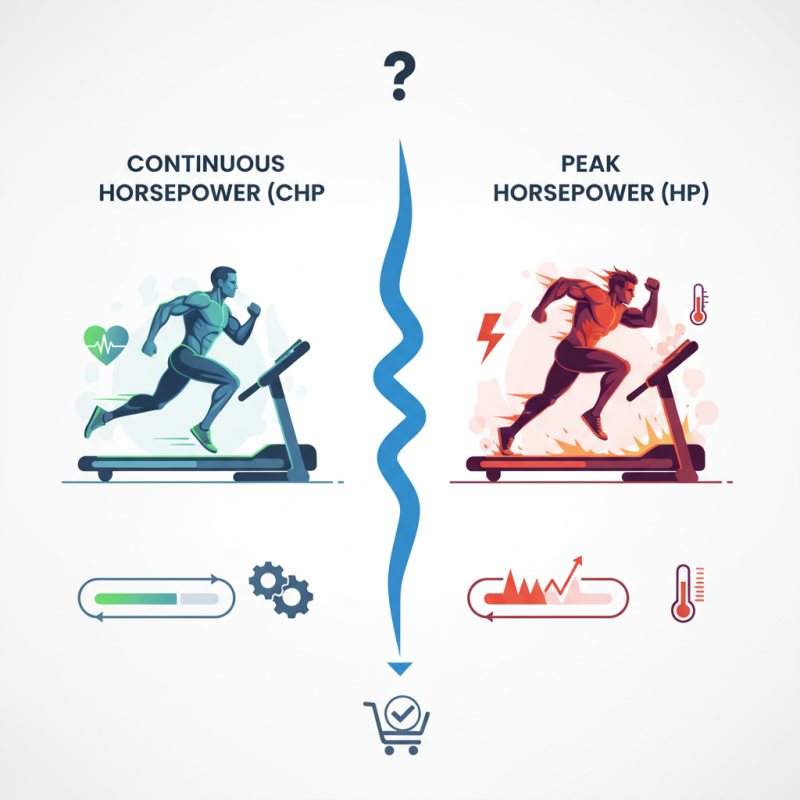
When shopping for a treadmill, understanding motor power ratings is crucial. Two common measurements are Continuous Horsepower (CHP) and Peak Horsepower (HP). CHP represents the motor's ability to sustain power during workouts. In contrast, HP indicates the maximum power achievable, which might not be sustainable over time. According to industry experts, treadmills typically range from 1.5 CHP for light use to over 4 CHP for heavy-duty applications.
Choosing between CHP and HP can significantly affect performance. A higher CHP often correlates with better endurance, reducing the risk of overheating. Research shows that treadmills with at least 2.5 CHP perform well for serious runners. However, many buyers overlook the importance of these ratings. Treadmills with high HP but low CHP may offer peak performance during initial use but fail under prolonged stress.
Additionally, users might find discrepancies in their treadmill experience based on motor ratings. A 3 CHP motor could support users weighing up to 300 pounds, but with an HP rating alone, it's hard to gauge reliability. Evaluating these aspects ensures buyers make informed decisions, maximizing their investment.
When buying a treadmill, understanding the differences between Continuous Horsepower (CHP) and Peak Horsepower (HP) is crucial. CHP refers to the motor's ability to sustain power over time. In contrast, HP indicates maximum power output for short bursts.
According to industry reports, a treadmill with a CHP of at least 2.0 is adequate for most home users. However, serious runners may require up to 3.0 CHP for optimal performance.
Buyers should consider how often they’ll use the treadmill. If it's for occasional use, a lower CHP might suffice. For regular training sessions, prioritize CHP. Peak horsepower can mislead consumers; it does not reflect the motor’s ability to sustain the workload. Many treadmills advertise high HP, yet prove inadequate during prolonged workouts.
Tip: Look for treadmills that clearly state their CHP ratings. Always read user reviews to gauge real-world performance.
Understanding these distinctions can guide more informed choices. Many may feel overwhelmed by specs, but a focus on long-term performance proves vital. Rely on trusted reviews and expert opinions to navigate the options. Balancing power ratings with actual user needs may lead to a more satisfying purchase.
When choosing a treadmill, motor power is crucial. The horsepower (HP) rating indicates the motor's overall strength. It's essential for sustaining high speeds and accommodating various user weights. Meanwhile, continuous duty horsepower (CHP) measures the motor's performance during extended use. CHP tends to be a more accurate reflection of power for home treadmills.
Variability in motor power can affect a treadmill's efficiency. A motor that's too weak can struggle with incline workouts or continuous running. This may lead to overheating or premature wear. On the other hand, a motor with excess power may not provide a smooth experience for lighter users. Understanding the balance is key.
Buyers should also consider the treadmill's overall design. A strong motor requires a sturdy frame to withstand dynamic movements. The combined weight capacity also plays a role in performance longevity. It is crucial to evaluate these factors to make a well-informed decision.
This chart compares the Continuous Horsepower (CHP) and Peak Horsepower (HP) ratings of treadmill motors. The CHP represents the motor's power during continuous use, while HP denotes the maximum power the motor can generate. Understanding these differences is crucial for buyers to assess treadmill performance effectively.
When selecting a treadmill motor, understanding the difference between CHP (Continuous Horsepower) and HP (Peak Horsepower) is crucial. Buyers often overlook this distinction, leading to dissatisfaction. CHP indicates the motor’s ability to sustain power over time, while HP measures the maximum power output. For home use, a motor with at least 2.5 CHP is advisable. This ensures smooth operation during long workouts without overheating.
Fitness needs vary among users. Some may require higher power for intense running sessions, while others might only walk or jog. If your routine is aggressive, choose a motor with higher CHP. However, if you’re a casual user, a lower-powered motor may suffice. It’s essential to consider your fitness goals and frequency of use.
Reflecting on past experiences, some buyers regret not researching motor specs. They simply focused on price. It’s tempting to go for cheaper options. Yet, this could compromise performance and durability. Understanding motor specifications enhances the user experience significantly. Investing time in research can prevent future buyer's remorse and ensure a treadmill that meets your fitness needs effectively.
When purchasing a treadmill, understanding the influence of motor power on durability is crucial. Motor ratings typically use CHP (continuous horsepower) or HP (peak horsepower). CHP indicates how much power a treadmill can sustain over time, while HP reflects its maximum output for short bursts. Reports suggest that treadmills with a higher CHP tend to have better longevity, particularly for heavy users or intense workouts.
A treadmill with a low CHP might struggle under constant use. This can lead to increased wear, especially in the motor and belt components. Industry studies show that users who choose a motor with at least 2.5 CHP can expect enhanced performance and durability, sustaining their equipment for years. Conversely, those opting for machines with lower horsepower may need to replace their treadmills more frequently.
Tips: Always check user reviews to gauge reliability. Consider your weight and workout intensity when evaluating motor power. Don't overlook maintenance; regular servicing can significantly extend your treadmill's lifespan. Ultimately, investing in a quality motor may save you time and money in the long run.
| Motor Power Type | Recommended Usage | Expected Lifespan | Durability Rating | Price Range |
|---|---|---|---|---|
| 1.5 CHP | Light Walking, Home Use | 5-7 Years | Moderate | $300 - $600 |
| 2.0 CHP | Jogging, Light Running | 7-10 Years | Good | $600 - $900 |
| 2.5 CHP | Running, Heavy Use | 10+ Years | High | $900 - $1500 |
| 3.0 CHP | Commercial Use, Intensive Training | 10+ Years | Very High | $1500 - $3000 |
: CHP measures a treadmill motor's ability to sustain power over time.
HP shows the maximum power output of a motor for short durations.
A treadmill with at least 2.0 CHP is usually sufficient for home users.
CHP indicates sustained performance during workouts, unlike HP, which can be misleading.
Evaluate your fitness goals and how often you'll use the treadmill.
Low CHP treadmills might struggle, leading to quicker wear and potential replacement.
Reading user reviews can provide insights into real-world performance and durability.
Regular servicing and proper upkeep are essential for longevity.
Buyers focusing only on price may end up with a disappointing, less durable treadmill.
Invest time in research and consider both power ratings and actual fitness needs.
Treadmill motors are commonly rated in terms of Continuous Horsepower (CHP) and Peak Horsepower (HP), leading many buyers to wonder, "What is the difference between treadmill motor CHP and HP?" CHP represents the motor's sustained power output, making it a more reliable indicator of a treadmill's performance during prolonged use. In contrast, HP refers to the maximum power the motor can achieve for short bursts, which might mislead consumers regarding the actual durability and efficiency of the treadmill during regular workouts.
Understanding these differences is crucial for choosing the right motor power that aligns with individual fitness needs. Factors such as body weight, workout intensity, and frequency of use can influence the choice of motor power. Additionally, higher motor power typically correlates with better durability and longevity of the treadmill, ensuring that it can withstand rigorous exercise routines over time. Therefore, evaluating CHP and HP helps in making an informed decision for a reliable and effective fitness experience.

StepUp Treadmill