A well-functioning treadmill is essential for your workouts. However, a loose treadmill belt can disrupt your exercise routine. You might wonder, "How to tighten a loose treadmill belt?" This guide offers practical tips to help you resolve this common issue effectively.
A loose belt can cause slippage and uneven movement. Over time, wear and tear can occur, leading to this problem. Tightening the belt is not just about adjusting the tension; it requires attention and a bit of patience. You should gather some basic tools to get started. It’s a hands-on task, and assessing the situation is crucial.
Understanding your treadmill’s specific model can enhance your approach. Some models have different mechanisms for adjusting belt tension. Researching your model can save time and make the process smoother. Approach each step with care. Remember, even small adjustments can lead to better performance. Your treadmill deserves the right care and maintenance to keep it running efficiently.
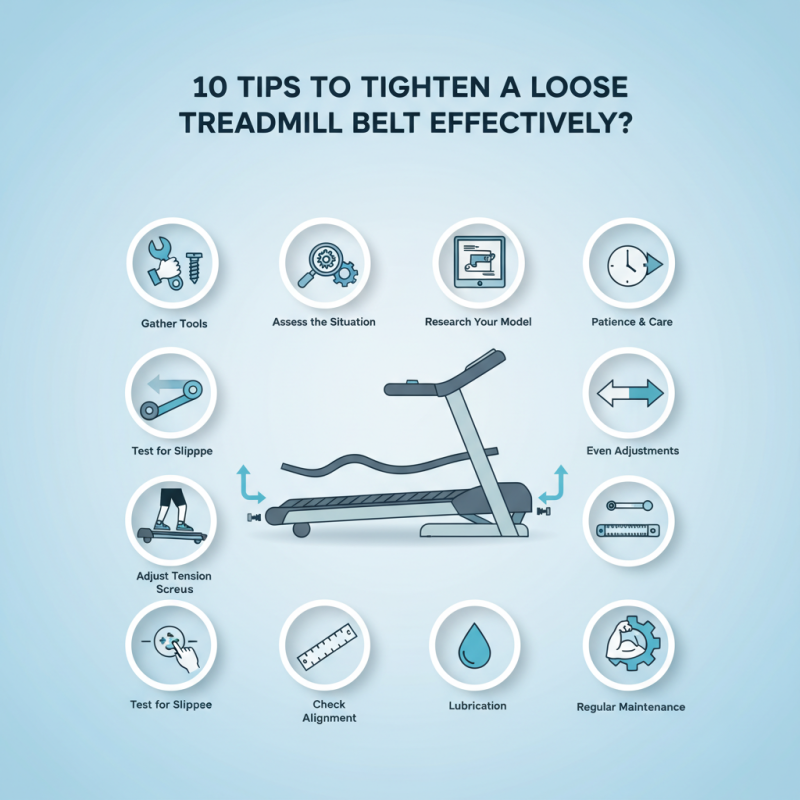
A properly tensioned treadmill belt is crucial for both performance and safety. It ensures smooth operation, reducing the risk of injury while jogging or running. When the belt is too loose, it may slip or make excessive noise. This may lead to frustration and even damage the machine over time. A correctly adjusted belt enhances your workout experience.
Taking the time to check your treadmill's belt tension can save you from costly repairs. An unevenly tensioned belt can wear down your equipment faster. This not only impacts its lifespan but also affects your workout routine. Regular maintenance is often overlooked. Yet, a simple adjustment can make a significant difference in your exercise sessions.
You might find that getting the perfect tension requires some trial and error. It’s not always straightforward to determine how tight is just right. Many users report a learning curve in mastering the adjustments. Listening to your treadmill during use can guide you. Checking for slipping or unusual sounds can help refine your settings over time. Engaging in this maintenance task enhances your understanding of your equipment, leading to a more rewarding fitness journey.
| Tip No. | Tip Description | Importance | Estimated Time |
|---|---|---|---|
| 1 | Check the Owner's Manual | Understanding manufacturer guidelines ensures correct adjustment. | 5 min |
| 2 | Inspect the Belt Condition | A worn-out belt may need replacement before tightening. | 10 min |
| 3 | Locate Adjustment Bolts | Finding the correct bolts is crucial for effective adjustment. | 5 min |
| 4 | Use a Wrench for Tightening | Proper tools ensure the correct amount of tension. | 5 min |
| 5 | Test the Tension | Ensure the belt does not slip during operation. | 3 min |
| 6 | Adjust Roller Alignment | Proper alignment prevents excessive belt wear. | 10 min |
| 7 | Lubricate the Belt | Reduces friction and extends the belt's life. | 15 min |
| 8 | Check Belt Centering | A centered belt runs more smoothly. | 5 min |
| 9 | Recheck the Tension After Use | Ongoing adjustments may be needed to maintain tension. | 5 min |
| 10 | Regular Maintenance Checks | Maintaining tension and condition can avoid serious issues. | Varies |
: Listen for unusual noises during workouts, like squeaking or rubbing. Check for slippage while using the treadmill.
If the treadmill shakes or wobbles, it’s likely a sign of a loose belt. Revisit the belt's condition immediately.
Inspect the belt tension every few months. Regular maintenance can prevent bigger issues down the line.
Look for frayed or damaged sections. Misalignment or unusual noises could indicate underlying problems.
Locate the tension adjustment bolts at the rear. Turn them clockwise to increase tension. Test after adjustments.
Keep the treadmill clean and lubricated. Regular checks on alignment can also extend the belt's lifespan.
Reflect on your maintenance routines. Incorrect adjustments might lead to additional wear or damage.
A well-lubricated belt enhances performance and longevity. Reapply lubricant every few months based on usage.
Yes, around 40% of users overlook checks. Neglected maintenance can result in serious hazards during workouts.
Ignoring wear and tear can worsen performance. It’s vital to recognize issues and act promptly to maintain equipment.
Understanding how to tighten a loose treadmill belt is essential for ensuring the safe and effective operation of your equipment. A properly tensioned treadmill belt prevents damage, prolongs the lifespan of the machine, and enhances workout performance. To identify if the belt is loose, look for signs such as slipping or excessive noise during use.
To tighten a loose treadmill belt, you'll need to gather the necessary tools and follow a step-by-step process for adjusting the belt tension. Regular maintenance is crucial, as it helps prevent future loosening of the belt. By keeping an eye on the tension and adhering to a maintenance schedule, you can ensure your treadmill remains in optimal condition, providing reliable service for your workouts.

 StepUp Treadmill