A treadmill can look level on carpet and still rock underfoot. A soft pile compresses unevenly, while a thick rug may hide a sloping floor. That small movement can make each stride feel awkward and place extra stress on the frame. How to level a treadmill on carpet? Start with the manufacturer’s setup instructions, then check the machine on the exact spot where you plan to use it. Small shifts matter.
The ACSM’s 2024 Worldwide Survey of Fitness Trends, based on responses from more than 2,000 fitness professionals, ranked wearable technology as the leading trend. It does not measure treadmill stability, but it reflects how closely people track their workouts and equipment. A stable base deserves attention too. Adjust the treadmill’s leveling feet in small increments, test each corner, and walk slowly before increasing speed. If the carpet compresses or the machine still rocks, a firm, treadmill-approved equipment mat may help distribute the load; it cannot correct a damaged floor or faulty frame.
One limitation matters: I could not verify a named expert’s published quotation specifically about leveling treadmills on carpet, so I won’t invent one. For accurate model-specific advice, the owner’s manual and the manufacturer’s service team are stronger sources than a generic quote. Check again after the carpet has settled. It may need another adjustment.
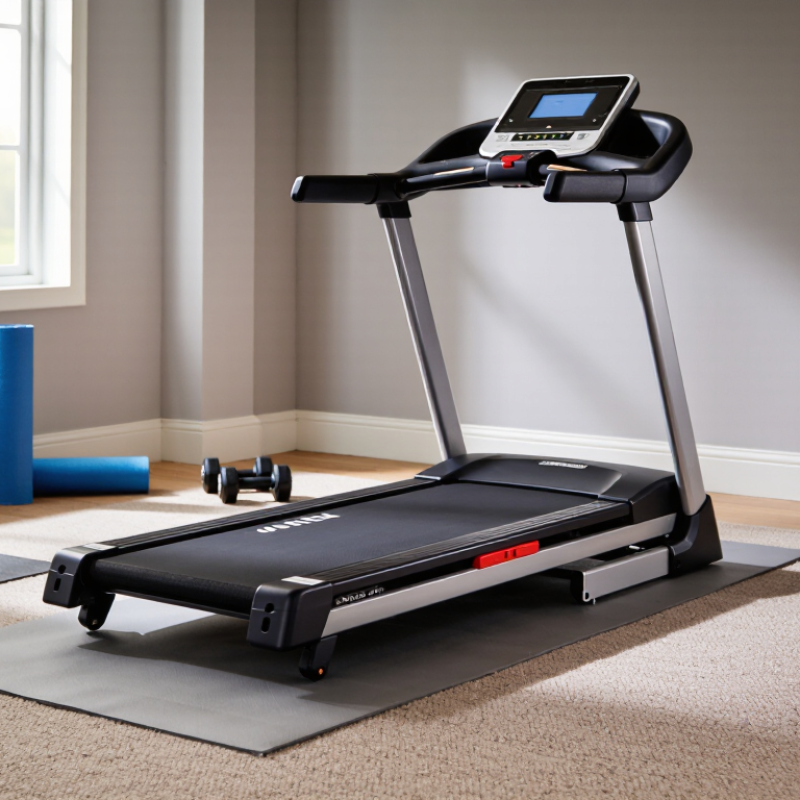
Before placing a treadmill, inspect the carpet rather than assuming it is flat. Look for uneven seams, curled edges, worn patches, or a thick, springy pile. Press down with your hand in several spots; soft underlay may compress differently across the room. A quick check helps. Set a straightedge or level on the bare floor nearby, if accessible, to spot a slope you might miss by eye.
Choose a firm, level location with low-pile carpet and stable flooring beneath it. Avoid plush rugs, loose mats, and areas where the carpet bunches when you walk. That matters. A treadmill can rock as its weight shifts, and repeated movement may leave dents or pull carpet fibers. Leave the clearances specified in the treadmill manual, especially behind the belt, and keep the machine away from damp areas and blocked ventilation paths.
A dense equipment mat may spread pressure and protect the carpet, but it cannot correct a badly uneven floor. Check that the mat itself lies flat and does not slide. I would not trust a single bubble-level reading on a thick carpet; compression can change once the machine is loaded. Recheck the treadmill after positioning it, then walk slowly and listen for rocking or shifting. A small adjustment may still be needed.
| Assessment | What to Check | Suitable Condition | Recommended Action |
|---|---|---|---|
| Carpet pile | Check whether the carpet is low-pile and firm or thick and plush. | A firm, low-pile surface compresses less under the treadmill feet. | Prefer a firm, low-pile area. On thick carpet, use a rigid treadmill mat approved for the equipment, while following the treadmill manual. |
| Carpet and pad condition | Look for loose carpet, soft padding, wrinkles, worn spots, or areas that compress unevenly. | The surface feels stable, with no bumps or noticeable change in firmness under each foot. | Choose a more stable location if the carpet shifts or compresses unevenly. A mat can protect carpet but cannot correct an unstable subfloor. |
| Floor beneath the carpet | Check for a firm, level supporting floor and avoid raised seams, thresholds, or soft spots. | The supporting floor is solid and does not flex or slope noticeably. | Move the treadmill to a firmer, more level spot if the floor flexes. Do not use loose shims or improvised supports beneath the frame. |
| Location and clearance | Allow the operating and safety clearance specified in the treadmill manual; keep the area clear of rugs, cords, and obstacles. | The treadmill sits fully on the same stable surface, with unobstructed access and required clearance. | Position the entire frame on the mat or carpet, away from uneven edges and transitions between flooring types. |
| Initial leveling check | With the treadmill switched off, check the frame or deck side-to-side and front-to-back using a level, if available. | The frame sits steadily without rocking, and the level check is within the equipment manufacturer's guidance. | Adjust only the designated leveling feet, following the manual. Recheck stability after each small adjustment. |
| Stability after adjustment | Press gently on the frame to check for rocking; then perform a cautious, low-speed test according to the manual. | The treadmill remains steady and does not shift or rock during the check. | Stop using it if it rocks, shifts, or makes unusual movement. Reassess the location and consult the manual before use. |
Always follow the treadmill manufacturer's instructions for floor type, mat use, leveling, and clearance.
Look for curled edges, uneven seams, worn patches, or thick, springy pile. Press several spots; soft underlay may compress unevenly. A straightedge on nearby bare flooring can reveal a slope.
Choose low-pile carpet over firm, level flooring. Avoid plush rugs, loose mats, and spots where carpet bunches underfoot. Keep the clearances specified in the manual, especially behind the belt.
A dense mat can spread pressure and protect carpet fibers. It cannot correct a badly uneven floor. Check that the mat lies flat and does not slide.
Switch off the treadmill and follow its manual. Place a spirit level on a stationary frame rail. Turn the feet in small increments until they contact the carpet firmly. Recheck the level and tighten any lock nuts.
With the treadmill off, gently press alternating frame corners. Watch for a lifting foot or shifting carpet. Keep hands clear of the belt and rollers. Small movements matter.
Walk slowly while holding the handrails. Stay centered. Stop if the frame shifts or feels uneven, then switch off before adjusting it again.
Yes. Wait a few minutes, then check front to back and side to side. Carpet may compress under the machine’s weight. I once assumed one adjustment would hold; it did not.
How to level a treadmill on carpet? Start by assessing the carpet to find a firm, even area, avoiding thick or uneven sections that could make the machine unstable. Gather a level and any tools needed to adjust the treadmill’s feet, then inspect the feet for damage or uneven positioning. Place the treadmill in the chosen location and allow the carpet beneath it to settle before making adjustments.
Turn the leveling feet gradually until the frame sits evenly and all feet make secure contact with the floor. Use the level to check the treadmill from front to back and side to side, making small corrections as needed. Finally, gently test the frame for rocking or movement. If it shifts, readjust the feet and check the level again until the treadmill feels steady on the carpet.

 StepUp Treadmill